$11,000–$13,000 is the realistic national band for a standard three-bedroom full repaint, and West Auckland exterior jobs commonly land anywhere from $8,500 to $20,000+ depending on scaffolding, access, and substrate condition. West Auckland quotes sit above the national midpoint because the local work is slower, wetter, and more prep-heavy than a plain suburban repaint elsewhere in the country.
You've probably got peeling weatherboard in Henderson, a tired plaster wall in Te Atatū, or an interior that's overdue for a proper refresh in Massey. The right painter doesn't just spray colour on top and hope for the best. They decide whether your house needs a surface fix, a coating system change, or a full maintenance repaint that can hold up in Auckland's coastal weather.
What West Auckland Homeowners Really Need From a Painter
A West Auckland homeowner standing in front of flaking paint usually isn't buying “painting”. They're buying time before the next failure, and that means the first question is always the same, what's underneath the paint right now? If the wall is weatherboard, plaster, cedar, or brick, the answer changes the job completely.
A house in Henderson with sun-baked boards on one side and damp, shaded timber on the other doesn't need a decorative touch-up. It needs a painter who understands substrate condition, moisture history, and how a coating system behaves once it's been hit by rain, salt air, and UV for years. That's why a repaint here is a substrate-and-prep decision first, a colour decision second.
Practical rule: if the quote doesn't start with prep and substrate checks, it's not a serious quote.
Most homeowners should sort three things before they sign anything. First, decide the actual scope, full exterior, partial exterior, or interior only. Second, ask what the painter thinks the substrate needs, not just what colour you like. Third, compare contractors on how they explain the work, because the right team will tell you where the weak points are before they pick up a brush.
If you're still deciding how to filter painters, use a proper contractor checklist like the one in this guide to choose reliable painting contractors in Auckland. That's where the difference shows up. A good contractor talks about repairs, primers, masking, and weather windows. A weak one talks about being “fast” and “affordable”.
For West Auckland homes, especially older ones, the repaint interval is never just a calendar question. It's a condition question. If the coating system is wrong for the wall, the repaint cycle shortens, and you pay for it twice.
West Auckland Painting Costs in 2026
The market here has a clear premium, and I'd rather give you the honest numbers than let you guess. Auckland painters sit around $42 per m² for interior work, $58 per m² for exterior work, and about $62 per hour, while the national averages are $35 per m², $50 per m², and $55 per hour respectively, according to a 2026 pricing guide. That same guide says Auckland painting and decorating prices are typically 10–20% higher than the national average, which is exactly what you'd expect in a market with higher demand and tougher working conditions. Average painting cost NZ
A lot of people only compare the per-square-metre rate. That's a mistake. Exterior work in West Auckland often needs more surface prep, more careful access planning, and more time lost to weather interruptions, so hourly labour and setup matter as much as coverage.
| West Auckland Painting Cost Benchmarks for 2026 | Auckland | National Average |
|---|---|---|
| Interior work per m² | $42 | $35 |
| Exterior work per m² | $58 | $50 |
| Hourly labour | $62 | $55 |
A standard national three-bedroom full repaint commonly sits at $11,000–$13,000, and Auckland exterior jobs commonly run from $8,500 to $20,000+ depending on access and scaffolding. That range shows where the key variables are. A two-storey home with awkward access, soft timber, or plaster cracks will never price like a flat, easy, low-maintenance unit.
If you want a sanity check before you take a quote seriously, compare it with a proper Auckland repaint benchmark like the one in this house repaint cost guide. A quote that comes in way below these bands usually means one of two things. Either the painter has misread the job, or they're stripping out prep that you'll end up paying for later.
The honest view is simple. West Auckland sits at the upper end because the work is harder here. Cheap rates are usually a sign that something has been left out, not that you've found a bargain.
The Prep-First Workflow and the Standard Behind It
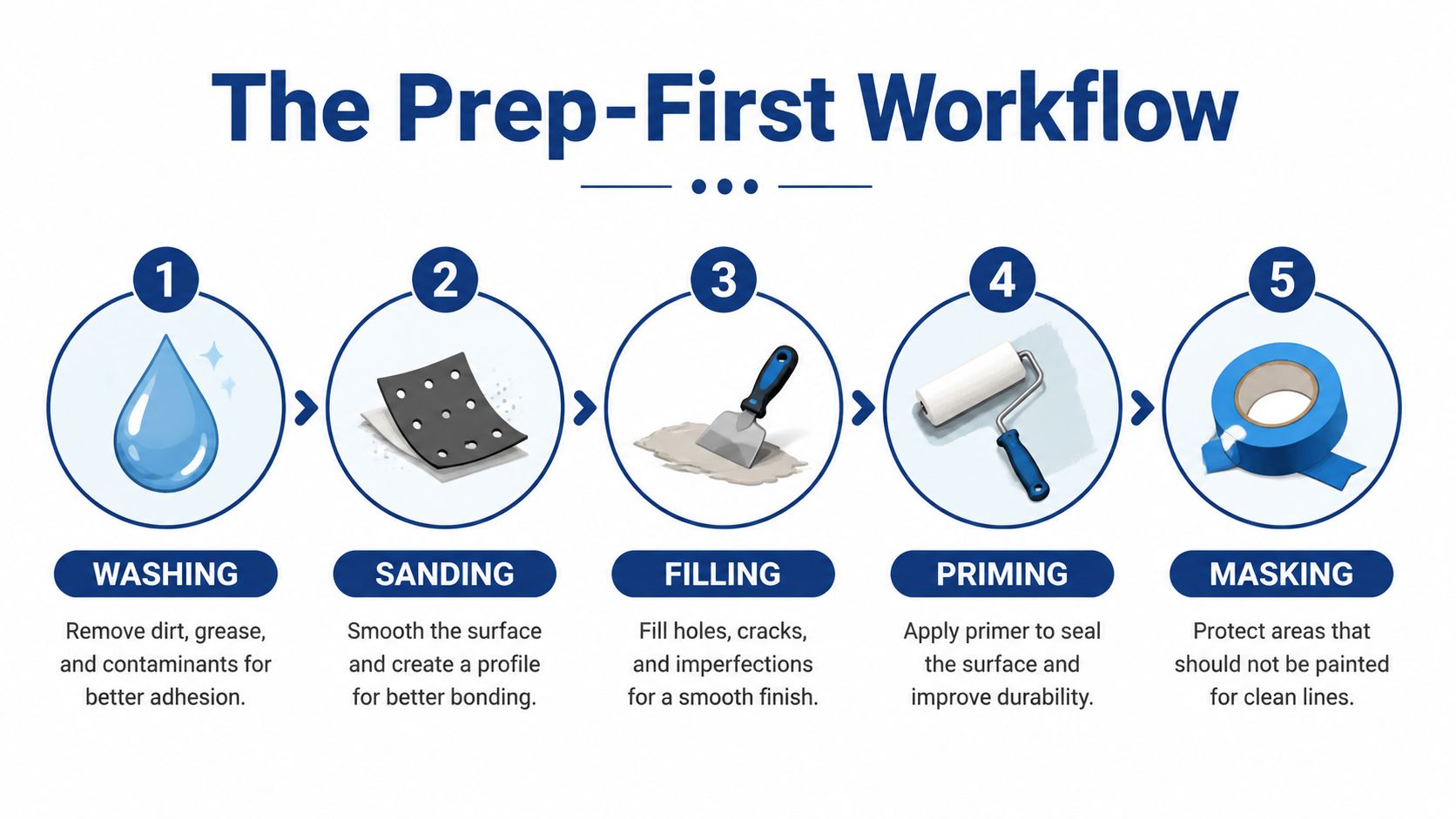
A proper repaint starts long before the first topcoat. On a West Auckland house, the sequence should be obvious and boring in the best way. Wash the surface, sand it back where needed, fill defects, prime the bare or repaired areas, then mask everything that shouldn't get paint on it.
AS/NZS 2311:2000/2009/2017 is the standard you want a painter to work to because it covers painting buildings, product selection, surface preparation for unpainted and prepainted substrates, recommended systems for new and maintenance work, inspection, and testing protocols. That matters because paint failure rarely starts with colour. It starts with poor prep, the wrong primer, or a coating system that doesn't suit what's already on the wall. AS/NZS 2311 building painting standard
A good repaint is built around adhesion, compatibility, and inspection. Colour is the last decision, not the first.
The NZQA skill standards line up with that same approach. Painters are expected to interpret project instructions, control adjoining-surface protection, check paint viscosity, and spot defects before topcoat application. That's the practical reality of a job done properly. It's not a single-pass cosmetic job, it's a controlled sequence where each step supports the next.
For weatherboard, plaster, and cedar, this prep-first method is what stops premature failure like flashing, adhesion loss, and uneven film build. If old coatings are weathered or patchy, the new system has to bond to that history, not just to fresh timber or plaster. That's why a quote should itemise washing, sanding, filling, priming, masking, and any repairs. If it doesn't, you're being asked to trust a finish you can't verify.
I'd also expect a painter to explain where they'll test adhesion, where they'll seal open grain, and how they'll treat repaired sections so they don't stand out under daylight. That's what separates a real maintenance repaint from a cosmetic cover-up. The best-looking fresh coat is useless if the substrate underneath is still moving, dirty, or incompatible.
Resene and Dulux Systems for Coastal Conditions
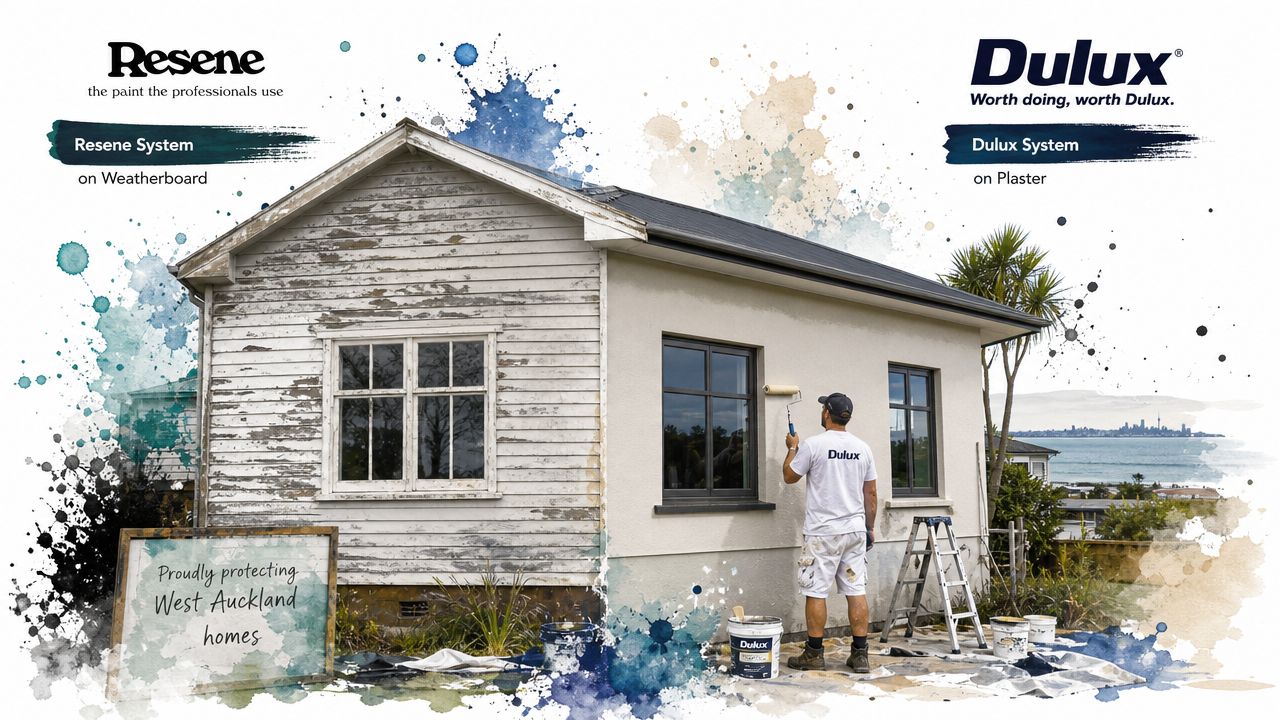
Brand loyalty is a weak way to choose exterior paint. The smarter move is to match the coating system to the substrate and the exposure, then choose the product line that fits the job. In West Auckland, that usually means timber, plaster, cedar, and brick each need a different conversation.
Resene and Dulux both have strong exterior systems, but they're not interchangeable in practice. For timber weatherboards, you want a system that handles movement and proper sealing. For plaster, you want a coating approach that respects cracks and breathability. For cedar, stain or timber-protection systems matter more than trying to force a standard film finish to behave like something it isn't. For interiors, low-VOC options make sense where families want less smell and faster re-occupancy.
My view: the cheapest topcoat over the same prep still fails early if the system is wrong for the wall.
If you want a simple filter, ask the painter what they'd use on your actual substrate, not what they stock by default. A competent contractor can explain why one system suits weatherboard better, why another is better for plaster, and where a timber stain beats a full paint film. That's the level of thinking you want when salt air, moisture, and UV are part of the daily equation.
For homeowners comparing brands and finishes, this paint selection guide is a sensible starting point because it sits at the level of system choice rather than marketing claims. In real life, premium systems usually cost more per litre, but they can reduce the chance of early recoating in a coastal suburb. That's the trade-off that matters.
Painters North Shore offers residential exterior and interior painting with prep-led methods, so it's one example of a contractor that works around system selection rather than just pushing a single product line. You should expect that same standard from any painter you're considering in West Auckland.
Why the Cheapest Quote Usually Costs More
The cheapest quote looks clever on paper and expensive in the real world. The reason is simple, skipped preparation and the wrong system don't fail on day one, they fail after the cheque is cashed. By then, the only person paying for the shortcut is you.
On weatherboard, a rushed job usually means old coatings weren't properly keyed, primed, or repaired. On plaster, weak crack treatment and the wrong finish can leave you with visible movement and earlier recoating. On cedar, the wrong film-forming approach is a mistake because timber needs the right protection cycle, not a generic wall-paint mentality.
| Substrate | What matters most | What goes wrong when the quote is too cheap |
|---|---|---|
| Weatherboard | Full prep and coating system discipline | Early peeling and patchy adhesion |
| Plaster | Flexible crack management and compatible coatings | Visible cracking and repeated touch-ups |
| Cedar | Timber-appropriate protection | Finish breakdown and uneven weathering |
A price gap is only worth celebrating if the scope is identical. It usually isn't. One contractor is pricing in surface correction, masking, priming, and proper topcoats, while another is hoping you won't notice what's missing until the paint starts to lift.
If you want a quote filter that works, ask for three things in writing. Ask for prep line-items, ask for the workmanship guarantee, and ask what happens if hidden timber repairs turn up once the old paint is removed. Also check that the crew is fully insured and Site Safe certified, because the cheapest quote isn't cheap if the job creates risk on your property.
Here's the honest trade-off. A more expensive quote can be the cheaper option over a full repaint cycle because it buys you a longer interval before the next major job. In coastal Auckland, that's the point. You're not buying paint, you're buying years before the next strip, repair, and redo.
Colour Consultation, Finishes, and Real West Auckland Examples
A good colour consultation should stop you from making expensive visual mistakes. West Auckland living rooms with decent north-facing light can handle warmer whites better than dim hallways, while darker feature walls work best when the room has enough light and the rest of the palette stays calm. That's the part most homeowners get wrong, they pick a colour from a tiny swatch and ignore the light the room gets.
Finish choice matters just as much. Matte suits living areas where you want a softer look. Semi-gloss is smarter for kitchens and bathrooms because it stands up better to wiping. Enamel belongs on trim and doors where you need a harder surface and cleaner lines.
Don't separate colour from maintenance. The finish decides how often you'll notice marks, not just how the room feels on day one.
Exterior colour choices in West Auckland should be calmer and more forgiving than trendy. Coastal greys, muted whites, and timber accents usually age better than loud schemes because they don't fight the light or the weathered materials around them. That's especially true on weatherboard and plaster homes where surface movement and patching can be more visible under harsh daylight.
If a painter includes colour consultation with the quote, use it. The point isn't to hand over taste to someone else, it's to make sure the palette and finish fit the house you live in. A well-chosen finish can reduce visible wear as effectively as a good colour can improve the whole feel of a room.
Common Questions About Hiring House Painters in West Auckland
How long should an exterior repaint last here?
Treat that as a substrate question, not a fixed promise. Weatherboard, plaster, and cedar all age differently, and the repaint interval depends on prep quality, exposure, and the coating system used. If a painter gives you a lazy one-size-fits-all answer, keep walking.
What should a workmanship guarantee cover?
It should cover the painter's labour and the finish performance tied to their work, not just a vague promise that “it'll be fine”. Ask what happens if adhesion fails, if masking damage appears, or if a repaired section shows through after the job. A real guarantee is specific.
Can painters work around occupied or tenanted homes?
Yes, but only if they plan the job properly. That means dust control, clear access, protected fixtures, and a sequence that lets people keep using the space safely. In rentals, communication matters as much as finish quality.
What if old paint reveals damaged weatherboards?
Then the quote should change, because you've uncovered a repair problem, not just a painting problem. Any decent painter should flag that immediately, explain the fix, and update the scope before they go any further. That's normal maintenance work in West Auckland, not a surprise.
If you want straight advice and an itemised on-site assessment, talk to a crew that treats prep, coating systems, and local weather the same way a proper contractor should. Painters North Shore can quote residential interior and exterior work with the kind of practical detail that helps you compare scope, not just price, and that's the right way to hire in West Auckland.