You can get away with a quick paint-over in a spare bedroom. You can't do that on a North Shore home with tired plaster, salty air on the cladding, and a landlord asking for a fast turnaround between tenants. The moment you see fine cracking around a ceiling line, a patched wall that keeps flashing through, or an exterior that's gone chalky on the weather side, the job stops being about colour and starts being about substrate.
Why North Shore Homes Need a Considered Approach
A homeowner in Takapuna rings after noticing hairline cracks in an old villa ceiling, while the weatherboards at the back of the house in Browns Bay have faded unevenly from coastal exposure. The first instinct is usually to ask for a repaint. The better question is what failed underneath, because a paint finish only lasts when the wall, ceiling, or cladding is ready to receive it.
North Shore properties deal with a mix of older housing stock, rental churn, and sea air. That combination makes preparation-led plastering and painting services a maintenance decision, not a cosmetic luxury. When moisture, movement, or poor adhesion is already in the substrate, colour choice won't save the finish.
The local market also reflects how established this trade is in New Zealand. Stats NZ's 2024 financial data records 2,427 businesses in plastering and ceiling services, up from 2,310 in the earlier year shown in the file, with 4,300 employees in the latest year and NZ$1,034 million in income reported for the preceding year before one later income value was suppressed due to sampling error. That scale matters because North Shore work sits inside a nationally durable trade ecosystem, not a one-off maintenance niche. The wider painting and decorating services market was estimated at NZ$2.0 billion in 2025 with 5,832 businesses nationwide, which shows how broad the demand is for repainting, repairs, and refurbishment work across homes and commercial property (Stats NZ business performance data, NZ painting industry market estimate).
Practical rule: if the surface is moving, holding moisture, or breaking down under the paint, the fix starts with repair and sealing, not with a colour card.
For owners and property managers across the Shore, the true cost sits in the second job. A rushed repaint can look fine for a while, then start flashing, blistering, or peeling when the first wet season or tenant turnover hits. That's why a proper inspection, repair plan, and coating system matter before a single roller goes on.
What Plastering and Painting Services Actually Cover
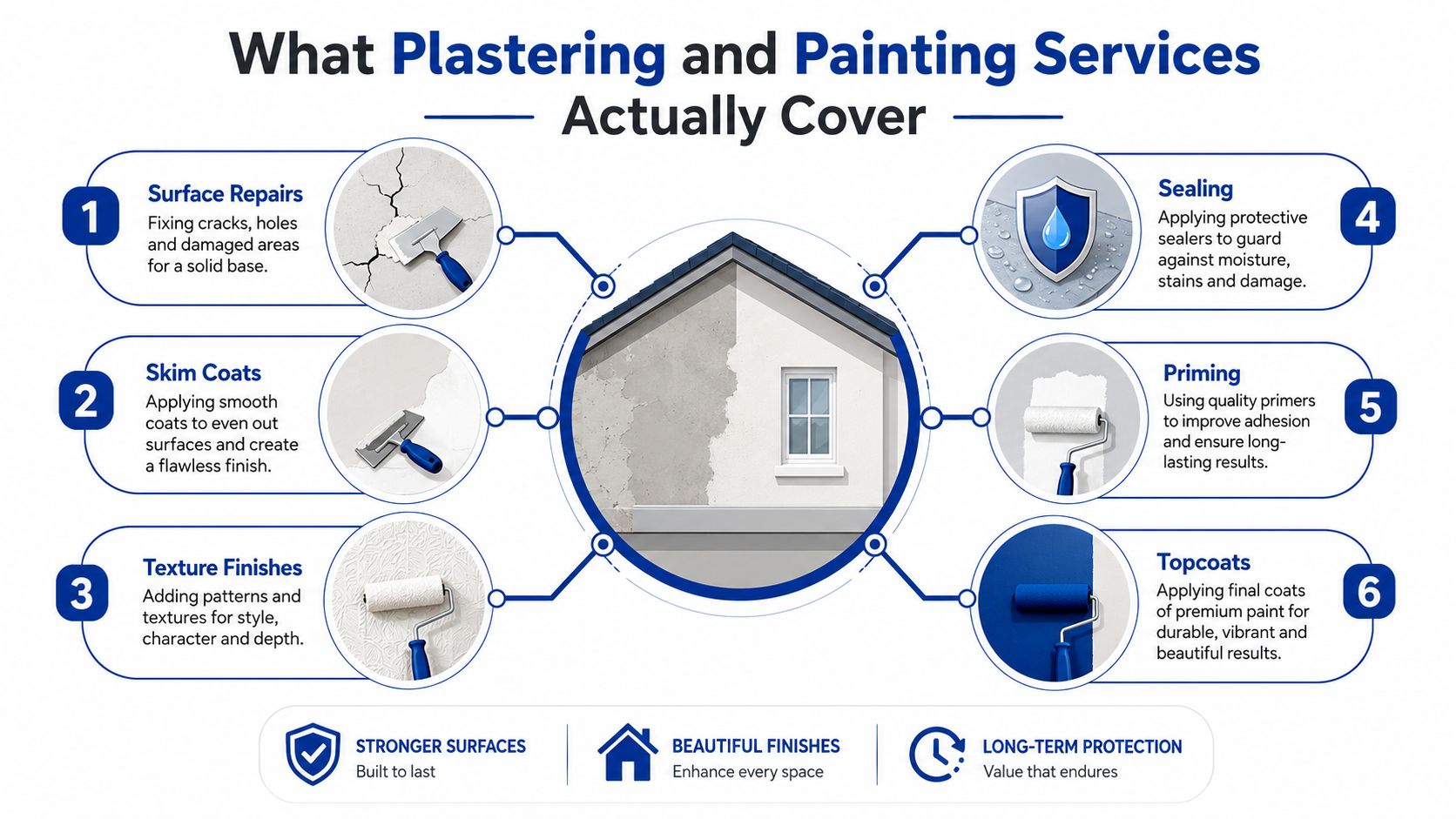
The cleanest way to think about plastering and painting services is as two linked jobs. Plastering rebuilds the surface, painting protects and finishes it. If the plaster isn't sound, the paint just becomes a cosmetic layer over a weakness.
The repair layer comes first
Surface repairs handle cracks, dents, failed joints, and damaged sections. A skim coat is a thin levelling layer used when the wall is generally sound but needs smoothing, while a full re-plaster is for larger failures, unstable areas, or major profile correction. Texture finishes sit in the middle, they can hide imperfections, but they also lock you into a look that needs to be matched carefully if future patching is ever required.
Paint follows only after the substrate is dry and stable. USG notes that plaster bonds to paint through pore penetration and recommends one coat of alkali-resistant primer/sealer followed by two topcoats, with a polyethylene film test used to detect residual moisture, visible condensation after 24 hours means the plaster is still too wet (USG plaster preparation guide).
The finish layer is more than colour
Sealing, priming, and topcoating are separate steps, not jargon. Sealing locks down the surface, priming gives the finish coat something reliable to grip, and topcoats provide the colour and wear resistance you see every day. On a good job, paint is the polished surface on top of a repaired system, not a disguise for one.
A contractor who skips repair detail to save time is usually selling a short cycle, not a durable finish.
Cabinet refinishing, floor coatings, and similar specialty work sit alongside wall jobs because they follow the same logic. The substrate decides the system, and the system decides whether the finish lasts. That's the core scope you're hiring for: surface correction, moisture control, adhesion, and appearance in one sequence.
Matching Materials to Substrate and North Shore Conditions
North Shore homes don't all need the same coating system, even if the paint brand on the quote looks familiar. A weatherboard villa in Devonport, a plaster-clad home in Milford, and a cedar façade in Mairangi Bay all fail in different ways. The product has to match the surface, the exposure, and the maintenance expectation.
Substrate choice changes everything
Weatherboard and cedar need coatings that handle movement and exterior exposure without becoming brittle. Brick and plaster exteriors need careful sealing because porous surfaces can drink in moisture and undermine adhesion if the system is rushed. Inside the house, plasterboard is usually straightforward, but older lath-and-plaster walls can hold past repairs, movement lines, and uneven suction that show through badly if you use the wrong primer or skip the levelling step.
Coastal conditions push the decision further. Salt, wind, and repeated wet-dry cycles shorten the life of weak coatings, especially on façades that get full weather exposure. That's where a premium system often earns its keep, not because the label sounds better, but because the coating film is built for tougher conditions and fewer breakdowns.
If you want a broader look at substrates and cladding detail, the North Shore guide to plaster cladding NZ fits the same decision logic used on site. The point is not to buy the most expensive product every time, it's to avoid putting an interior-style finish on an exterior problem.
Product systems should follow the environment
Low-VOC systems make sense where indoor air quality and occupant comfort matter, especially in occupied homes or managed properties. Coastal-spec systems and elastomeric coatings earn attention when the substrate needs extra crack-bridging or weather resistance, but they're not a cure-all. They work best when the wall has already been repaired properly and the moisture issue has been controlled.
For specialty coatings and industrial-grade options, the APEX NANO Titan Coatings range is a useful reference point when comparing more durable system types. It's not about chasing a brand name, it's about understanding how different coating families behave under different demands.
The same thinking applies to paint selection in general. Premium systems can reduce how often a property needs repainting, but only if the substrate is ready and the applicator respects cure times, sealers, and compatibility. Otherwise, you've just paid more to hide the same failure.
How the Work Actually Happens on Site
A proper North Shore repaint starts long before anyone opens a tin. The first visit should involve a close look at cracking, dampness, failed filler, chalking, and access issues. If the contractor can't explain what they found, the quote is already too thin.
The sequence matters
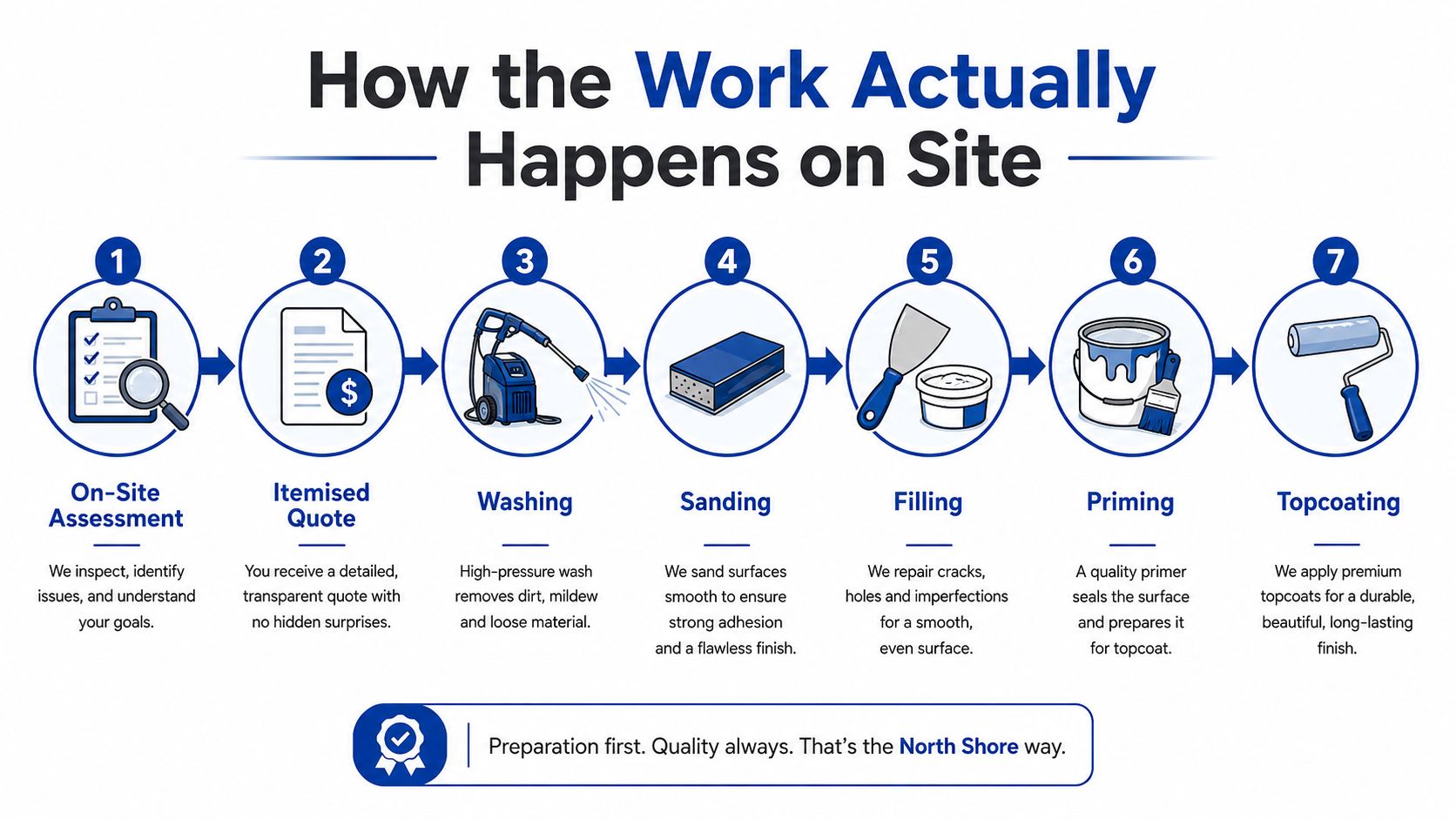
The site workflow usually moves in this order, assessment, itemised quote, washing, sanding, filling, priming, masking, and topcoating. Washing removes contaminants, sanding keys up tired surfaces, filling restores profile, and priming creates a stable base for the finish. Masking sounds minor, but it protects hardware, glass, flooring, and landscaping, and it saves time on cleanup later.
For a clearer visual of the sequence, the workflow is laid out in the linked process graphic and the video below.
Real delays come from real conditions
Weather is the obvious one on the Shore. Exterior work needs a dry window, and interior projects can still stall if the substrate needs more time to cure or if tenant access is limited. Substrate surprises are the other common delay, a wall that looked like a simple patch can open up once loose material is removed.
Spray application makes sense on large, repetitive surfaces such as fences, roofs, cladding, and some cabinet work. Brush and roller remain the better choice for trims, detail, and any area where control matters more than speed. A crew that knows when to switch methods is usually the crew that understands the job, not just the equipment.
If you're comparing approaches, the house paint guidance for North Shore projects is useful because it reflects the same reality, prep and access decisions determine how smooth the job runs. Good crews also sequence interior and exterior work so a home can stay liveable while the project moves through each zone.
Cost Drivers and Where the Money Actually Goes
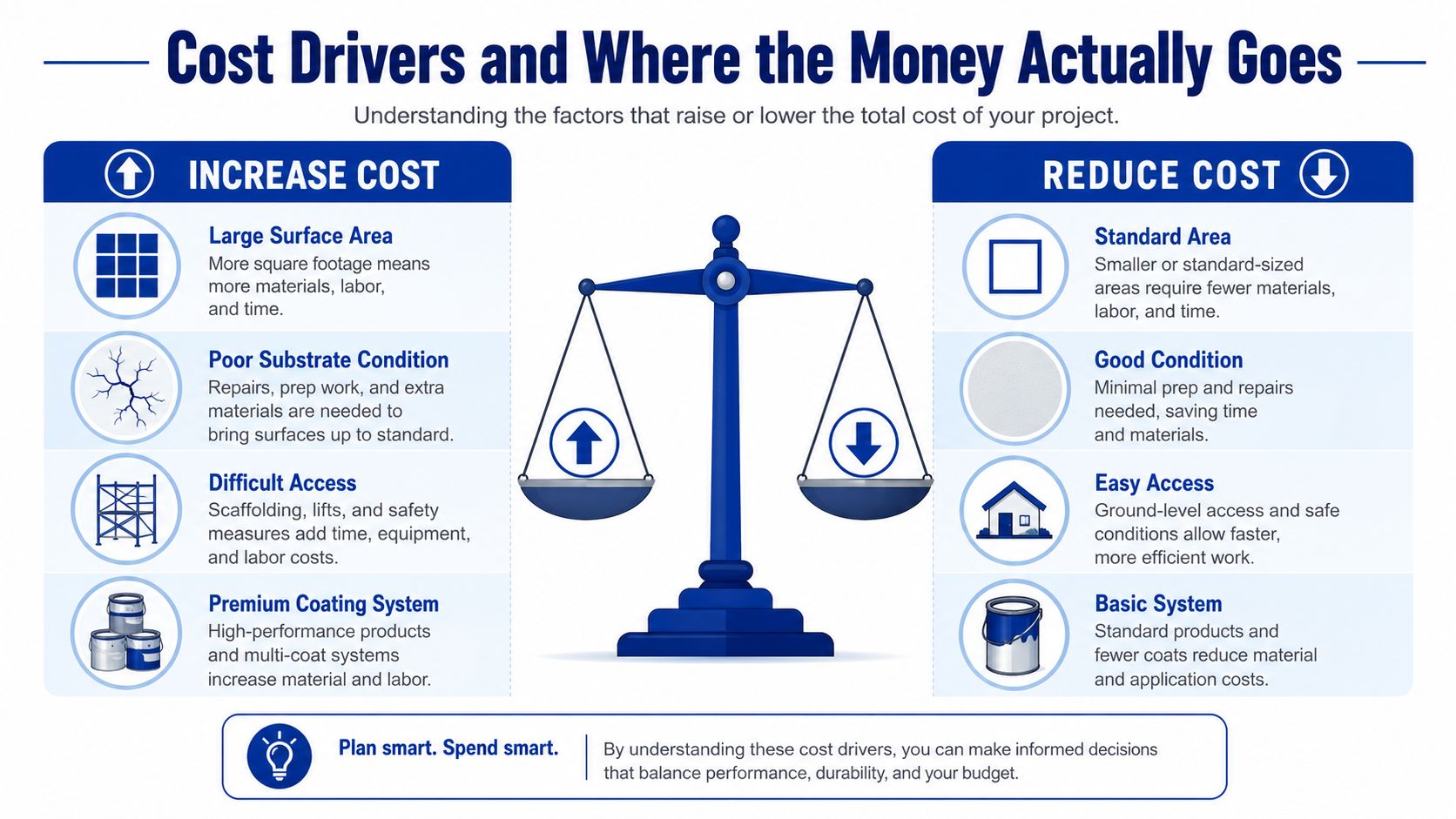
A cheap quote usually hides something. On North Shore homes, the line items that push a price up are almost always the same, surface area, substrate condition, access, coating system, and prep time. Once you see those pieces clearly, most quotes stop looking mysterious.
The main cost pressures are easy to spot
Large surface area means more labour and more material, but poor substrate condition is usually the primary budget driver. Cracked plaster, peeling paint, or soft timber forces extra preparation before the finish can even start. Difficult access adds time through ladders, scaffolding, or awkward detailing, and premium coating systems cost more because the products themselves and the application requirements are more demanding.
A standard area in good condition with easy access and a basic system sits at the lower end of effort. That doesn't make it a better job, it just means the contractor spends less time repairing and more time coating. The quote should make that difference obvious.
Patch repair, partial repaint, or full reset
A patch repair makes sense when the failure is local and the surrounding coating still holds. A partial repaint works when one area has aged faster than the rest, but the system is still broadly sound. A full system reset is the sensible call when the surface has multiple failures, the colour change is dramatic, or the maintenance cycle has been stretched so far that the old coating is no longer worth chasing.
On a coastal property, that lifecycle choice matters more than the first invoice. A small crack can be a paint-only fix, a plaster-and-seal job, or a sign of movement that needs deeper remediation. The cheaper option today isn't cheap if it reappears after the next wet season.
For homeowners weighing exterior work, the repaint house exterior guide helps frame the same trade-off in practical terms. It's the difference between buying time and resetting the surface properly.
Rule of thumb: if the existing coating is failing in several places, don't pay to touch up a system that's already at the end of its useful life.
A fair quote should show what gets repaired, what gets sealed, what gets primed, and what gets painted. If those stages are bundled into one vague line, you're being asked to trust the finish without seeing the plan.
How to Choose the Right North Shore Contractor
The best quote isn't the lowest number, it's the clearest plan from a crew that can deliver it. On the Shore, that means a contractor who understands substrate failures, coastal weathering, and how to keep a house or business usable while the work is underway.
Check the basics first
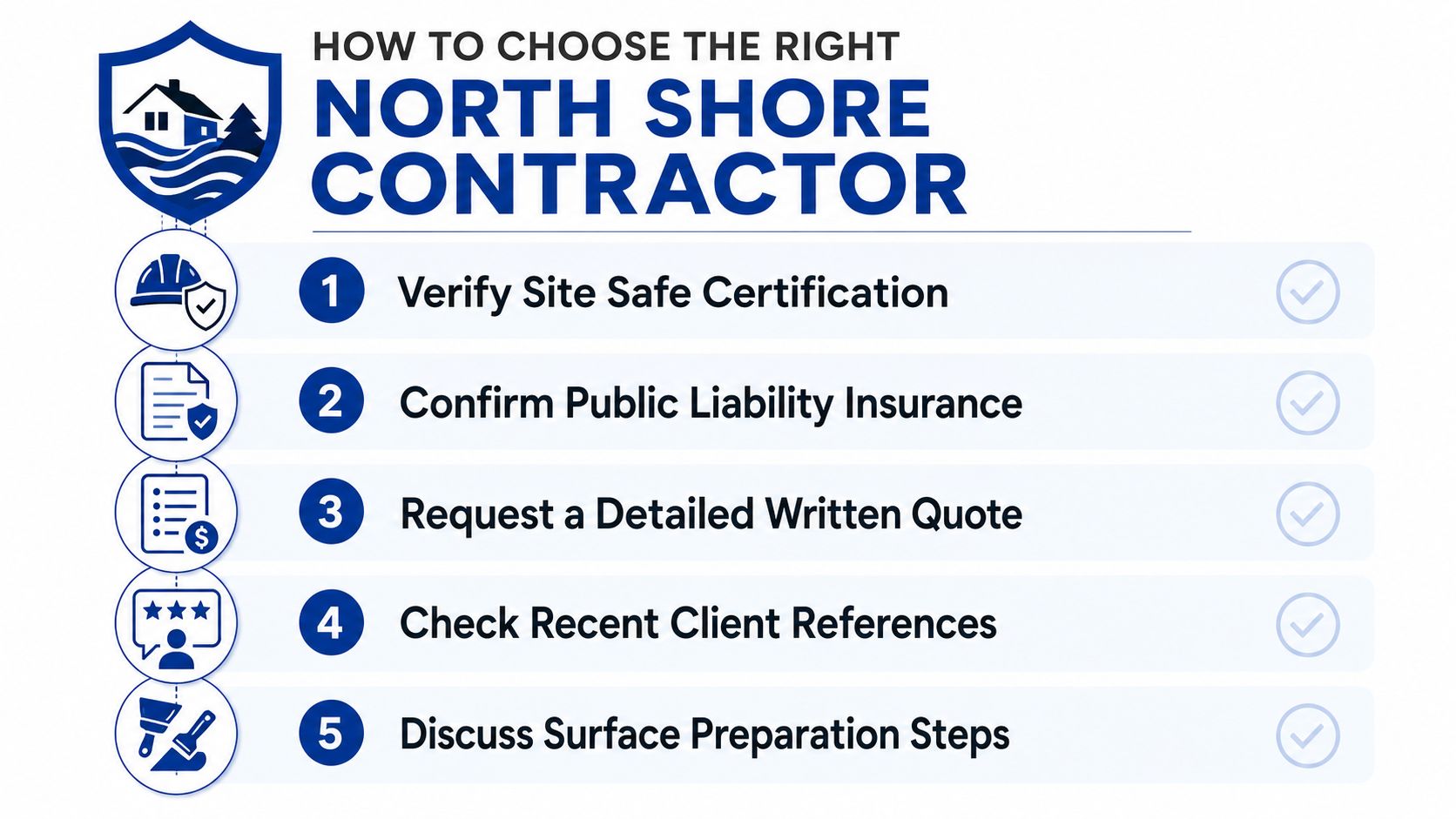
Ask whether the crew is Site Safe certified, insured, and willing to give a written workmanship guarantee. A clear on-site assessment matters more than a phone-only price because the wall condition, access, and repair scope decide most of the cost. If the contractor avoids an inspection, they're guessing.
A useful reference point for policy language is bonded and insured explained. The wording isn't the point here, the point is that homeowners should know what protection exists before anyone starts scraping, sanding, or spraying.
Ask questions that expose weak operators
- How will you handle substrate repairs? If the answer is vague, the quote probably is too.
- What happens if weather delays the exterior work? Good crews have a sequencing plan, not excuses.
- Which primer and topcoat system are you using on this substrate? The system should fit the wall, not just the brand preference.
- Will colour consultation be included? For residential work, that can save a lot of back-and-forth.
- Can you show recent references or reviews? Documented feedback matters more than polished sales talk.
Painters North Shore is one local example that provides interior and exterior painting, preparation-led repair work, premium Resene and Dulux systems, and colour consultation as part of residential quoting. That kind of bundled service is useful because it ties the surface assessment to the finish plan instead of separating them.
A contractor with a strong review trail helps, but the meeting matters more than the star rating. You want the person who notices the failed corner bead, the chalky soffit, or the damp patch at the base of the wall, then explains what they'll do about it.
Before and After on Real North Shore Properties
A Herne Bay villa with original plaster ceilings looked fine from the doorway, but the close-up told a different story. Fine cracking ran across the ceiling line, old patching had flashed through, and the paint had lost its even sheen. The fix was a targeted repair, careful sanding, sealing, and a full interior repaint that unified the room instead of spotlighting the old damage.
A weatherboard exterior near the coast had a different problem. The timber had weathered unevenly, joints were tired, and the previous coating was starting to break down where wind and salt hit hardest. That job needed wash-down, local repairs, proper spot priming, and a full exterior system built for exposure, not a quick colour refresh.
The finished result in both cases came from the same discipline, but the details were completely different. Interior work is about levelling and light, exterior work is about durability and movement. If you want a feel for how a maintenance-heavy job is documented in practice, the cleaning case studies approach to before-and-after presentation shows why clear condition notes matter.
Colour consultation adds value when it's tied to the substrate and the light, not just preference. A flatter, older interior needs a different treatment than a reflective coastal façade, and the wrong finish can make a repaired surface look worse even after the work is done.
Questions North Shore Owners Ask Before Booking
Fresh plaster needs to be fully dry before paint goes on, and in damp coastal conditions that means waiting for the substrate, not the calendar. USG's guidance is direct, if the polyethylene film test shows condensation after 24 hours, the plaster is still too wet to paint (USG plaster preparation guide). In practice, the right answer is always moisture first, coating second.
A small crack is sometimes just cosmetic, but not always. If it's isolated and the substrate is stable, a repair and repaint can be enough. If it keeps reappearing, follows a joint, or opens after seasonal changes, you're probably looking at movement or a deeper substrate issue.
A quality exterior repaint near the coast should be treated as a system with a service life that depends on exposure, prep, and product choice. The harshest façades fail sooner, especially where salt and wind drive moisture into weak spots. That's why the cheapest quote is often the one with the shortest useful life.
A fair written quote should itemise preparation, repairs, primers, topcoats, access requirements, and any exclusions. If a contractor can't tell you what's being repaired versus what's being painted, they haven't really quoted the job. Good plastering and painting services are a sequence of decisions, not a tin of colour.
If you're weighing up repairs, repainting, or a full surface reset on a North Shore property, talk to a crew that treats preparation as the main job, not the hidden one. Visit Painters North Shore to arrange an on-site assessment and get a quote that matches the actual condition of your home or building.