A properly prepared and coated metal roof in Auckland typically lasts 10–15 years before recoating is needed, with premium Resene or Dulux systems on well-maintained substrates reaching the upper end of that range. The difference between a repaint that holds its finish and one that fails early usually comes down to preparation, not the colour chosen.
You may be looking at your North Shore roof after a run of wet weather, noticing faded metal, lichen on tiles, or rust beginning around a flashing. The roof still keeps the rain out, but it no longer looks protected. A neighbour's roof may have been repainted recently, while another nearby roof is already bubbling and losing flakes after only a few seasons.
That contrast is common in Auckland's coastal environment. Salt carried inland, strong UV, humidity, mould, and wind-driven rain all test a coating system. A roof repaint can be a sensible way to protect a sound substrate, but paint can't repair structural movement, failed flashings, rotten framing, or widespread corrosion. The important decision is whether the roof needs a properly designed coating system or has reached the point where replacement makes better sense.
Why Roof Painting Looks Simple But Demands Preparation
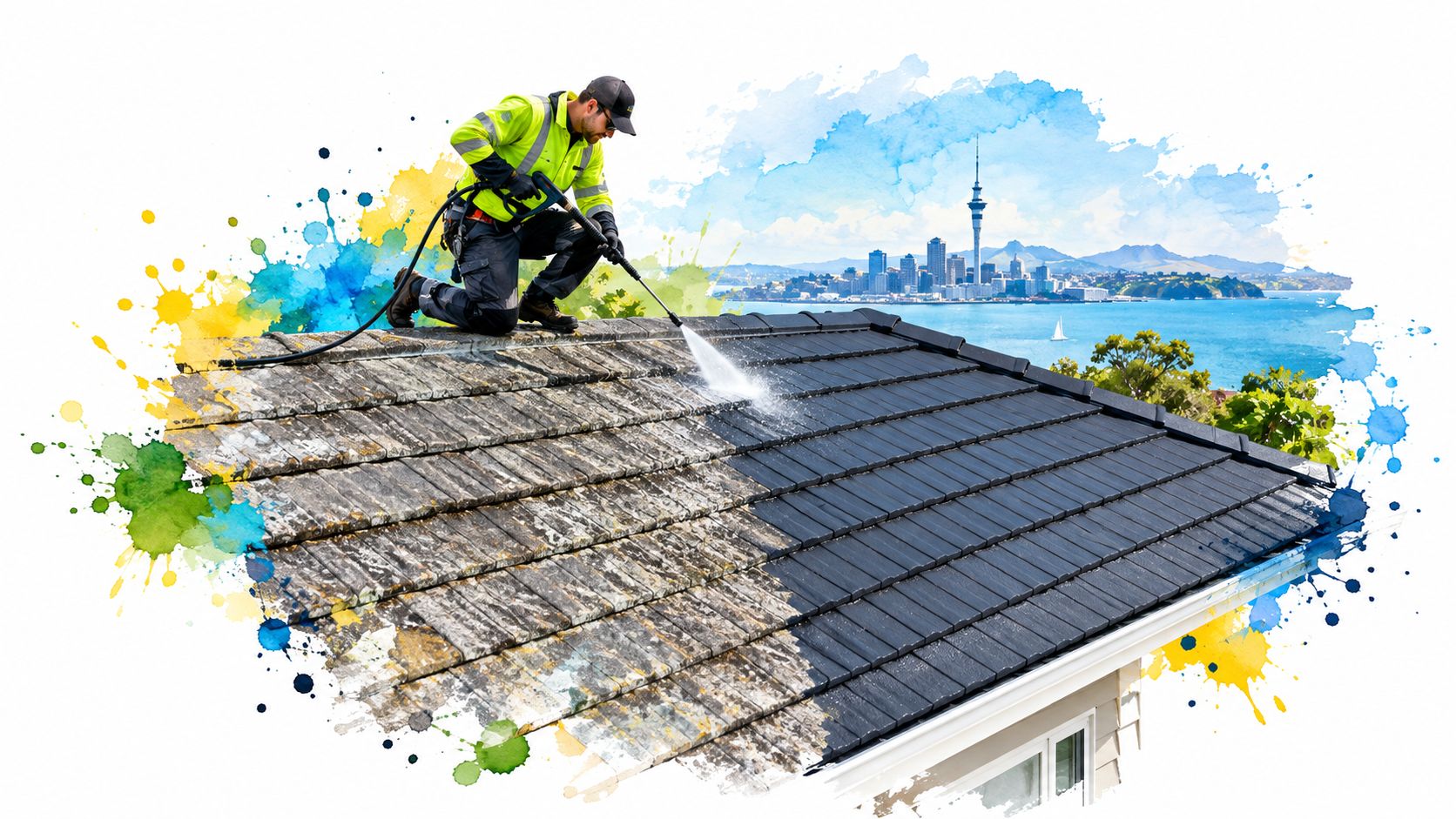
A roof can look transformed in a day. Darkened concrete tiles, refreshed corrugated iron, and a clean uniform colour make the entire property appear better maintained. The trouble starts when a contractor treats that visible change as the main objective and rushes the work underneath it.
On North Shore homes, early failure often begins before the first topcoat is applied. Chalk from an ageing coating remains on the surface, salt and airborne grime sit in laps and profiles, and moisture stays trapped around fasteners or flashings. The new coating may look excellent when it dries, but it has no reliable surface to bond to.
The visible finish can hide an invisible failure
Consider two similar houses exposed to the same weather. One contractor spends time removing loose paint, treating rust, rinsing thoroughly, allowing the roof to dry, and priming exposed metal. Another applies a quick wash and coats over residue because the surface appears clean from ground level.
The second roof may look acceptable at handover. Later, the coating starts lifting around fasteners, flaking at previously chalked areas, or blistering where moisture was sealed in. Homeowners often blame the product brand, but the failure usually reflects an incompatible or contaminated substrate.
Practical rule: A roof coating is only as durable as the weakest preparation stage beneath it.
The Building Performance maintenance guidance says roof cladding should be checked annually and that paint-on membranes must be recoated every 7–10 years. The same guidance points to manufacturer-specific maintenance requirements, so a contractor should consider the roof type and coating system rather than promise one repaint interval for every property.
Preparation costs more time than application
Washing, sanding, scraping, filling, masking, and priming aren't glamorous parts of the job, but they decide whether the finish remains attached. A contractor who prices only for spray application may appear cheaper because the most important labour has been omitted.
The same principle applies when comparing repair and replacement decisions in other roofing markets. A useful explanation of the financial and practical considerations appears in this guide to Western WA roof restoration costs, although Auckland roofs require decisions suited to local substrates and coastal exposure.
Before accepting a quote, ask what happens to chalk, rust, failed sealant, dirty laps, and areas of bare metal. If the answer is “we'll paint over it”, the proposed service isn't a preparation-led roof repaint.
Which Roof Materials Actually Benefit from Painting
Painting works best when the underlying roof remains structurally sound and the coating can form a stable bond. It isn't a universal treatment. A roof with active leaks, severe corrosion, widespread movement, or a failed substrate may need repair or replacement before any colour is discussed.
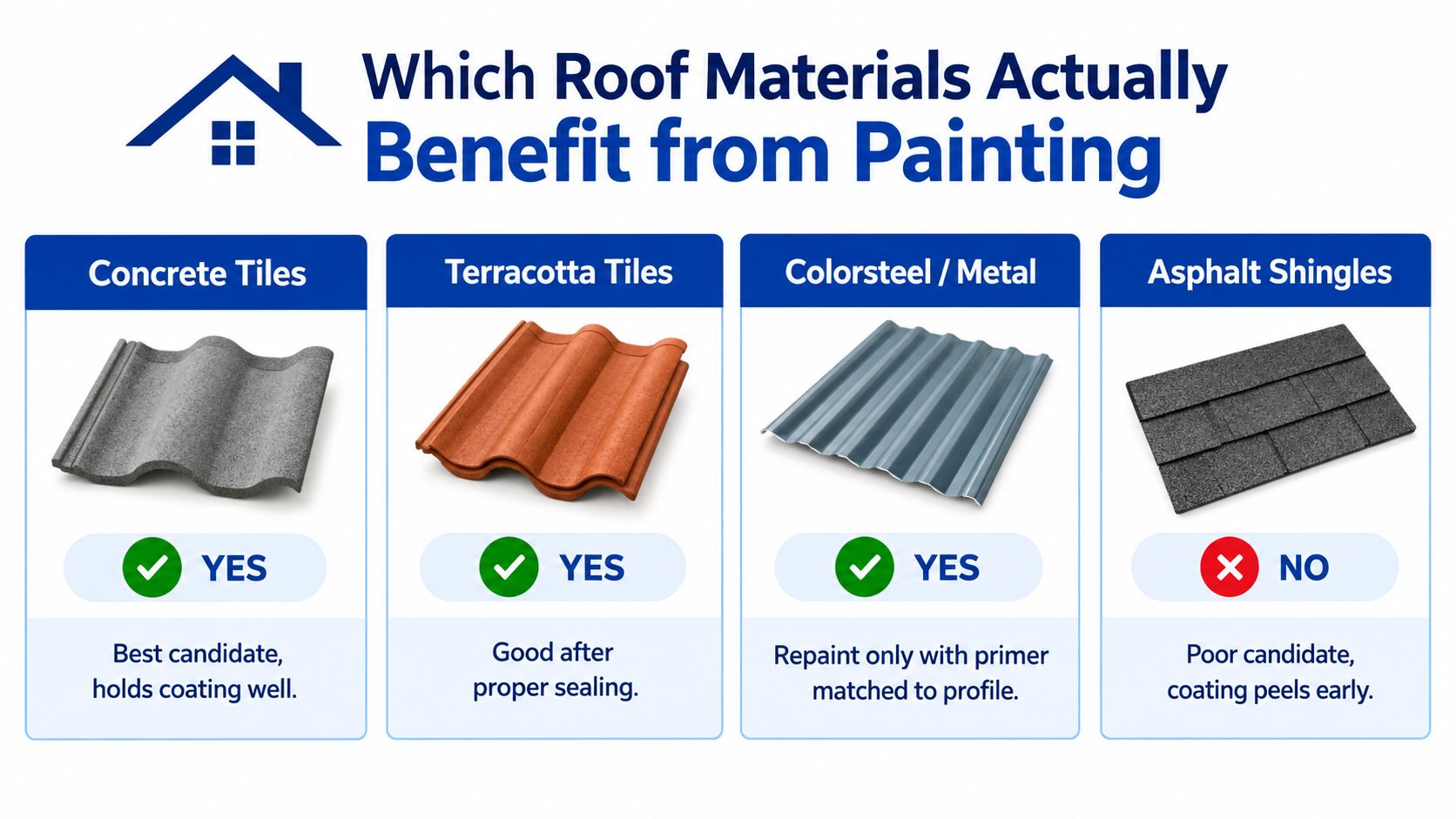
Metal roofing is often a strong candidate. Corrugated iron, Colorsteel, and other profiled steel surfaces can accept a compatible primer and acrylic roof coating after thorough cleaning and rust treatment. The profile must remain sound, however. Deep corrosion around fasteners, perforated valleys, and failing penetrations aren't cosmetic defects.
Concrete tiles can also respond well when they're intact, securely bedded, and free from extensive cracking. Coating can improve appearance and provide a renewed surface, but it won't stabilise broken tiles or correct movement in ridge bedding. Terracotta requires more caution because its porosity, glazing, age, and previous treatments affect adhesion. A contractor should test the surface and specify the preparation rather than assume a standard tile system will work.
A practical substrate decision
| Roof material | Painting can make sense when | Replacement or major repair is wiser when |
|---|---|---|
| Corrugated iron or Colorsteel | The sheets are sound and surface corrosion is treatable | Rust has perforated sheets or weakened fixings |
| Concrete tile | Tiles are intact and the roof remains stable | Cracking, movement, or failed bedding is widespread |
| Terracotta | The surface can be cleaned and sealed compatibly | Glazing or deterioration prevents dependable adhesion |
| Fibreglass | The surface is stable and the specified coating suits it | Cracking, brittleness, or delamination is extensive |
| Asphalt shingles | A specialist assessment confirms compatibility | The shingle surface is ageing, loose, or shedding granules |
Older bitumen-coated surfaces deserve particular caution. A new acrylic layer may not bond reliably to the existing material, and coating can conceal deterioration that should be inspected directly. Asphalt shingles are another poor candidate for casual repainting because their surface construction and movement can cause a coating to peel or interfere with the intended drainage behaviour.
For metal roofs, a specialist assessment should cover the profile, fasteners, laps, penetrations, rust, and previous coatings. The metal roof painting service from Painters North Shore describes this kind of substrate-led approach, including preparation and coating selection rather than treating every roof as the same surface.
A heritage villa may justify restoration because its original roof contributes to the property's character and replacement materials may alter the appearance. A newer build with widespread sheet corrosion may be better served by replacement. The right answer comes from the roof's condition, not from the fact that paint is available.
The Preparation Workflow That Determines Coating Success
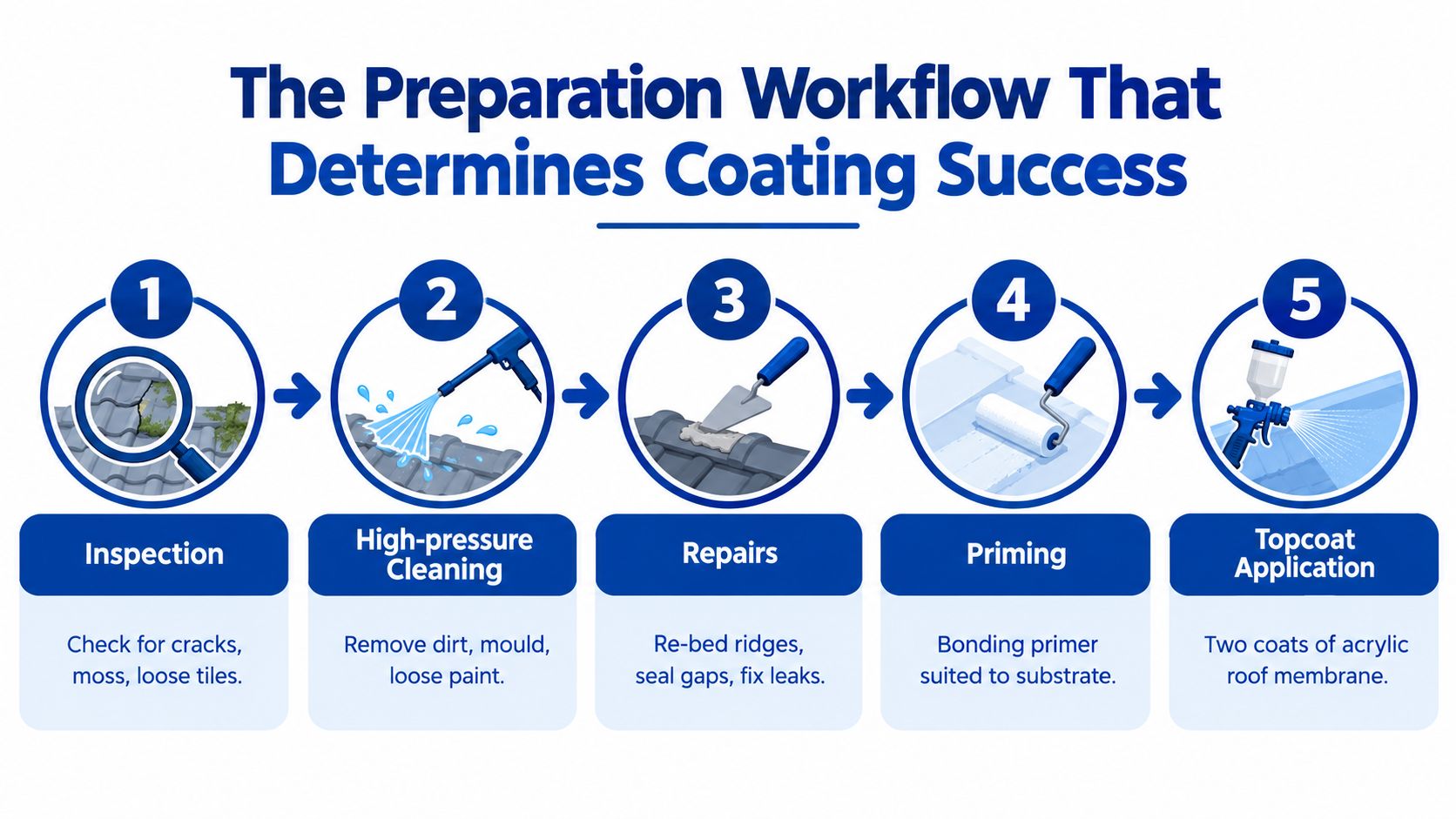
A durable roof repaint follows a sequence. Each stage removes a different risk, and skipping one usually transfers the problem into the coating film.
Inspection comes before washing
The first inspection should identify leaks, cracked tiles, loose ridges, failed sealants, rusted fixings, damaged flashings, blocked valleys, and unsafe access points. It should also record the existing coating, because a sound acrylic layer presents a different preparation problem from a chalky, bitumen-based, or unknown finish.
Repairs come before cleaning where water could enter the building. Cleaning a roof with unprotected laps or defective flashings can drive water into places it shouldn't reach, especially when the operator uses high pressure.
Cleaning removes more than visible dirt
Metal-roof maintenance guidance used in New Zealand specifies thorough cleaning at around 20 MPa, followed by complete drying and protection of laps and flashings from water intrusion. The pressure setting alone doesn't make the work professional. The operator still needs to control the lance, avoid damaging fragile surfaces, protect surrounding areas, and confirm that contaminants have been removed.
A proper workflow generally includes:
- Wash the substrate. Remove dirt, mould, salt residue, loose coating, and biological growth. Areas that remain visibly contaminated need further attention rather than immediate paint.
- Abrade and scrape. Sand chalked coatings and feather loose edges so the new system doesn't finish against unstable paint. Mechanical abrasion also helps expose sound material around rusted spots.
- Repair defects. Replace damaged tiles, deal with failed ridge bedding, seal suitable joints, and correct leaks. Filling over movement or active water entry only hides the symptom.
- Prime exposed areas. Bare metal and treated rust need a primer compatible with both the substrate and the selected topcoat. Primer chemistry matters around steel, galvanised surfaces, and previously coated profiles.
- Apply the roof coating. The topcoat must go onto a dry, prepared surface within suitable weather conditions. Coverage, film thickness, recoat timing, and the number of coats should follow the product system.
Chalk residue acts like a powder between the roof and the coating. Trapped moisture creates blistering or adhesion loss. Unsealed corrosion can continue beneath the finish and push rust staining through the new colour.
Site standard: If the contractor can't explain how the roof will be tested for dryness and surface stability, the application plan is incomplete.
AS/NZS 2311 provides guidance on painting building surfaces, including preparation, system selection, and inspection. Its practical importance is simple. The correct product cannot compensate for poor cleaning, unsuitable primer, or coating applied over a surface that hasn't dried.
For a visual overview of roof preparation and application methods, this roof painting process video can help homeowners understand why access, cleaning, and application equipment all affect the finished result.
Choosing Between Resene and Dulux Roof Coating Systems
Resene and Dulux both offer established coating systems, but the brand name is only one part of the specification. A suitable system must match the roof material, existing coating, level of weather exposure, and condition of the substrate.
A contractor should identify the primer and topcoat rather than write “premium paint” on a quote. On a sound metal roof, that may mean a metal-compatible primer followed by an exterior acrylic roof coating. On concrete tiles, the preparation and sealer requirements may differ. On an unfamiliar or previously bitumen-coated surface, testing and manufacturer guidance become more important than colour selection.
Compare systems by the roof, not the label
| Decision point | What to ask |
|---|---|
| Substrate compatibility | Is the system specified for steel, galvanised metal, concrete tile, terracotta, or another surface? |
| Existing coating | Will the contractor test adhesion and identify whether the old coating is acrylic, chalked, bitumen-based, or unknown? |
| Primer selection | Which primer is being used on bare metal, rust-treated areas, or difficult surfaces? |
| Exposure | Does the specification account for salt spray, strong sun, humidity, and wind-driven rain? |
| Finish | Will the selected sheen make maintenance marks and surface irregularities more visible? |
| Environmental requirements | Are low-VOC products available and appropriate for the substrate and application method? |
Resene's exterior ranges and Dulux's exterior systems can both be suitable when specified correctly. The practical difference on a real roof comes from compatibility, preparation, application conditions, and the contractor's ability to follow the system. A one-product approach across metal, tile, and previously coated surfaces is a warning sign.
Finish selection also has a trade-off. A strong sheen can make colour appear more pronounced but may highlight uneven repairs, while a lower-sheen finish can provide a softer appearance. The roof's texture, pitch, surrounding cladding, and visibility from neighbouring properties all matter.
The Resene exterior paint guidance is a useful starting point for discussing product families and finish choices with a contractor. It shouldn't replace a roof inspection or the technical data for the specific product proposed.
Premium paint doesn't turn poor preparation into good preparation. Ask for the full system in writing, including surface preparation, primer, topcoat, application method, weather limits, and maintenance requirements.
Coastal Exposure and Maintenance Planning for North Shore Roofs
A roof on an exposed coastal site doesn't experience the same conditions as one sheltered inland by mature trees and neighbouring buildings. Salt spray can settle on the surface, UV can degrade binders, humidity slows drying, and wind-driven rain tests laps, penetrations, and flashings.
New Zealand coating guidance notes that the period to first repaint for roofing and cladding is around 15 years, while the Building Code requires a minimum 15-year durability period for roofing with maintenance. The same guidance explains that UV can break down resin in some paints, which is why a planned maintenance cycle matters even when the roof still looks acceptable. See the New Zealand steel and coating guidance for the relationship between coating performance, UV exposure, and maintenance.
Watch the roof between formal inspections
Don't wait for widespread peeling. Early signs often include fading on sun-facing slopes, powdery chalk on the surface, localised rust around fixings, and coating wear near valleys or penetrations.
A simple maintenance routine can include:
- After severe weather: Check for displaced tiles, damaged flashings, new leaks, and debris collecting in valleys.
- During routine cleaning: Look for salt residue, mould, lichen, and blocked drainage points. Avoid aggressive DIY water blasting on fragile or poorly sealed areas.
- At inspection time: Photograph changes in colour, rust spots, bubbling, and exposed substrate so a contractor can compare condition over time.
- Before recoating: Address repairs and moisture sources first. A cosmetic touch-up won't solve a failed flashing or ongoing leak.
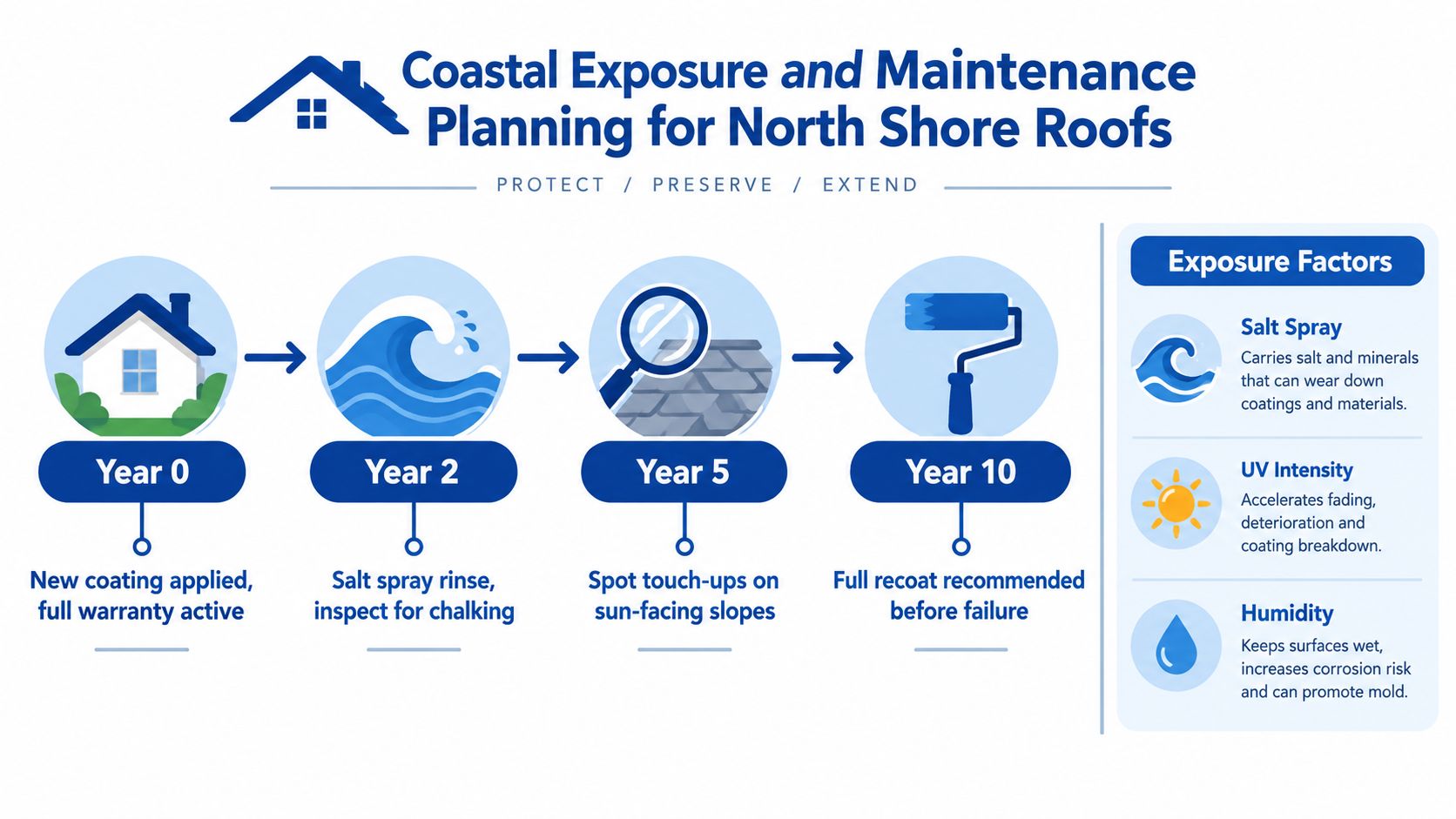
Body corporates and property managers should document roof condition by elevation and exposure. Sun-facing units, upper levels, and sections facing open water may deteriorate differently from sheltered elevations, so a staged plan can prioritise vulnerable areas without creating mismatched colour patches across the building.
The practical principles in these preventive roof maintenance tips are useful for organising inspections and minor repairs. For North Shore properties, the coating decision should still be tied to the specific roof material and local exposure.
A planned recoat is usually preferable to emergency work after widespread failure. The coastal home exterior paint guidance can also help homeowners discuss product selection for exposed properties, particularly where salt and UV affect the rest of the exterior as well as the roof.
Realistic Costs and Timelines for Roof Painting Projects
Roof painting costs vary too widely for a responsible contractor to give one universal figure without inspecting the property. The roof area matters, but so do access, pitch, height, substrate condition, repairs, preparation time, masking, primer requirements, and the chosen application method.
A straightforward metal roof with clear access may need cleaning, rust treatment in localised areas, priming, and a compatible topcoat. A multi-level home with steep sections, difficult access, failed sealants, and several existing coating layers demands more labour before painting begins. Heritage villas can add further complexity through intricate roof forms, delicate details, older materials, and the need to preserve the building's character.
What a sound quote should show
An itemised estimate should separate the work that protects the coating from the work that creates the visible finish.
| Quote item | Why it affects the project |
|---|---|
| Access and safety setup | Steep, high, or restricted roofs require more planning and equipment |
| Cleaning | Heavy contamination takes longer and may require controlled pressure washing |
| Surface repairs | Leaks, broken tiles, rusted fixings, and failed joints change the scope |
| Preparation | Scraping, sanding, abrasion, and drying determine adhesion |
| Priming | Bare or difficult substrates may need a dedicated bonding or anti-corrosion primer |
| Coating application | Spray, roller, and brush work suit different profiles and access conditions |
| Protection and cleanup | Landscaping, windows, cladding, tanks, and neighbouring areas need masking and care |
The product relevance notes for Painters North Shore list roof spray painting at $25–$55 per square metre for metal and profiled surfaces, with preparation that can include water blasting, rust treatment, and priming where needed. That range is a reference point for the listed service, not a substitute for a site-specific quote, because the roof's condition and access can change the actual scope. An estimate that appears cheaper because it excludes preparation may cost more once failures and remedial work are included.
Weather also controls the programme. Roof surfaces need to be clean and dry, and coatings require suitable conditions during application and curing. A crew may complete a simple accessible roof efficiently, while a complex commercial or heritage property needs staged work, additional safety planning, and weather allowances.
For broader guidance on presenting and evaluating trade services, these marketing insights for tradies provide useful context, but homeowners should focus on the technical detail of their own quote. Ask when washing will occur, how drying will be confirmed, which repairs are included, what primer is specified, how many coating stages are planned, and what maintenance the finished system requires.
A roof is usually worth recoating when the sheets or tiles remain sound, leaks are repairable, corrosion is localised, and the existing surface can be prepared properly. Replacement becomes the more rational option when the substrate is perforated, unstable, repeatedly leaking, or so degraded that coating would only conceal the problem. Painters North Shore provides roof assessment, preparation-led painting, and Resene or Dulux coating options for residential and commercial properties across Auckland's North Shore. Visit Painters North Shore to request an assessment and itemised estimate based on your roof's actual condition.