The walls are marked, the reception area looks tired, and the colour scheme that once felt sharp now makes the whole place look older than it is. Most North Shore business owners know when a repaint is overdue. What usually stops the job isn't the paint itself. It's the fear of mess, staff disruption, awkward fumes, blocked access, and the knock-on effect on customers.
That concern is justified. A commercial repaint can either refresh a business with minimal interruption, or it can create avoidable downtime if the job is planned badly. The difference usually comes down to how the project is scoped, staged, and supervised.
A good commercial interior painting project isn't just about getting a price per square metre. It's about protecting trading hours, keeping work areas safe, selecting coatings that suit the building, and ending up with a finish that still looks right after daily wear. On the North Shore, where many sites stay busy from early morning through to late evening, that practical side matters as much as the final colour.
Transforming Your Business Space Not Your Operations
A common situation looks like this. An office manager in Albany wants to repaint a reception area, meeting rooms, and staff corridors before a lease inspection or client event. A retail operator in Takapuna wants cleaner walls and a more current fit-out but can't afford to shut the shop for several days. Both need the same thing. A better-looking space without turning the week into a disruption exercise.

The smartest clients stop asking only, “What will this cost?” and start asking, “How will this affect the business while it's happening?” That shift changes the whole decision. A quote that looks cheaper on paper can become expensive if it blocks customer areas, pushes staff into noisy work zones, or forces parts of the premises to close during normal hours.
There's also a clear change in what owners expect from modern coatings. In 2023, 80% of building owners in New Zealand prioritised indoor air quality when selecting coating systems, which has helped make low-VOC paints standard in commercial specifications according to New Zealand commercial painting statistics. For occupied offices, clinics, retail spaces, and shared tenancies, that's not a minor detail. It affects how quickly rooms can be put back into use and how comfortable the space feels during and after the work.
Paint affects more than appearance
A repaint can sharpen brand presentation, make older joinery look cleaner, and improve how staff and customers read the space. In offices, colour and finish selection also influence glare, light reflectance, and how tidy walls look under everyday scuffing. If you're reviewing layout and presentation at the same time, this guide on designing a better workplace with paint is useful because it connects colour choices to how people use the space.
A commercial repaint works best when it feels organised, not invasive. Staff should know where work is happening, customers should still move safely, and the building should never feel like a half-finished site.
That is the benchmark. Not just fresh walls, but a smoother business environment while the work is underway.
The Anatomy of a Flawless Commercial Finish
Most problems blamed on “bad paint” are, in reality, preparation problems. In commercial interior painting, the visible topcoat gets the attention, but the finish only performs as well as the substrate underneath it.
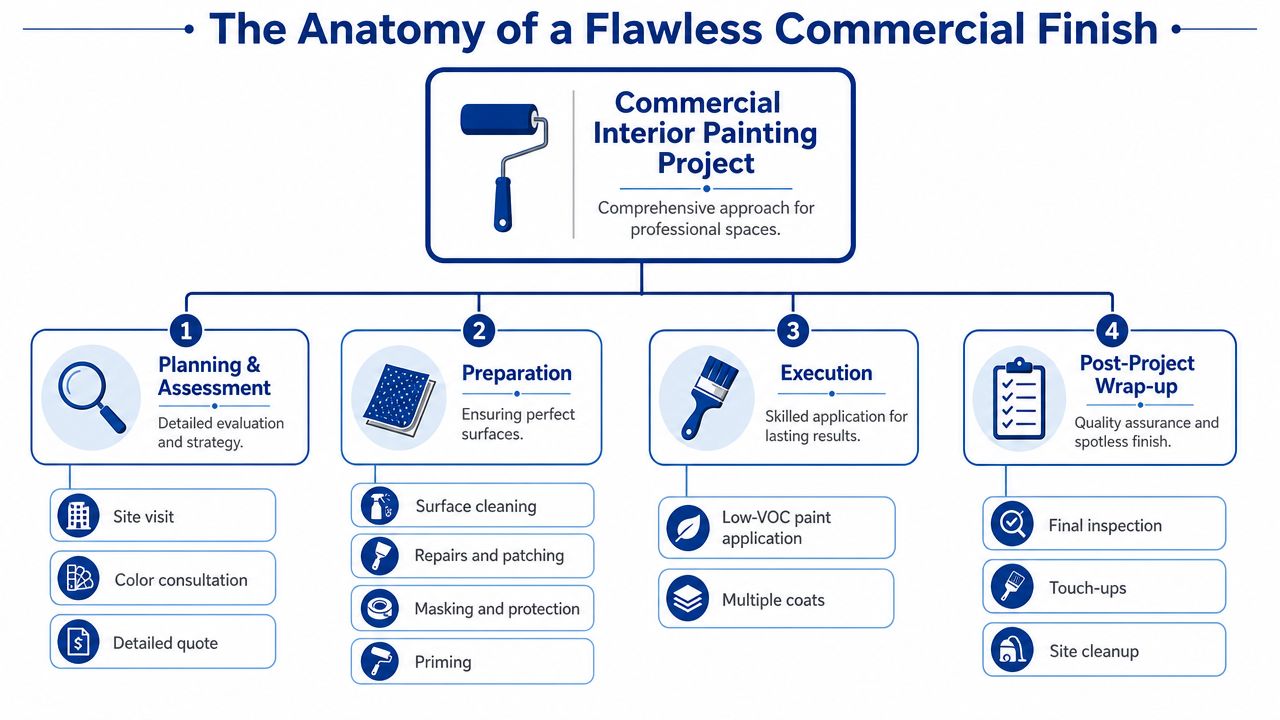
Professional specifications used in New Zealand follow a preparation-first workflow, and Resene's architectural paint specifications make that clear. If surfaces aren't repaired and primed properly, finishes fail early, imperfections show through, and the paint system loses service life. In high-traffic commercial interiors, that failure becomes obvious fast.
What proper preparation actually involves
Preparation is rarely one task. It's a chain of tasks, and missing one weakens the next.
- Surface cleaning: Dust, grease, hand marks, and airborne residue stop coatings from bonding properly. Reception desks, lunchrooms, corridors, and retail walls often need more washing than clients expect.
- Repairs and filling: Dings from chairs, cracked stopping lines, screw pops, damaged corners, and previous fixings need repair before any topcoat goes on.
- Sanding and feathering: This levels patched areas and removes loose or failing material so the finish doesn't flash or telegraph through.
- Masking and protection: Floors, glazing, shelving, counters, signage, and IT equipment must be protected before tools and tins come out.
- Priming: Different substrates need different treatment. New plasterboard, old painted walls, repaired patches, timber trim, and metal elements don't all take paint the same way.
A smooth final look comes from consistency in those steps. That's why detailed site assessment matters well before colour is chosen. If you're working through colour and finish choices at the same time, a proper commercial colour consultation process helps match sheen level, tone, and maintenance needs to the way the space is used.
Matching the coating to the room
Commercial interior painting isn't one product across every wall. Different spaces ask different things from the coating.
A client-facing boardroom usually needs a neat, low-odour finish with strong colour consistency under artificial lighting. A corridor near storage or shared amenities needs something tougher and easier to wash. A retail changing area or café back-of-house may need coatings that cope better with repeated cleaning and closer contact.
Practical rule: Choose the coating for how the room is used, not for how the sample card looks under showroom lighting.
Here's what tends to work better in practice:
| Area | What matters most | Better coating choice |
|---|---|---|
| Reception and meeting rooms | Appearance, low odour, even finish | Quality low-VOC acrylic systems |
| Corridors and common walls | Scuff resistance, washability | Durable acrylics with tougher finish characteristics |
| Staff kitchens and food-adjacent areas | Cleanability, low odour, compliance | Coatings suited to frequent wipe-downs |
| Warehouses and utility rooms | Coverage, durability, substrate compatibility | Systems chosen for larger areas and simpler surfaces |
What doesn't work
Shortcuts show up quickly in commercial settings. Painting over damaged stopping, skipping primer on repaired walls, or using a flat finish in a high-contact corridor usually creates repeat work. So does choosing a cheap product where staff bags, chairs, trolleys, or customer traffic constantly hit the walls.
The finish should suit the building's daily abuse. If the painter can't explain the prep sequence and the product logic room by room, the quote probably isn't detailed enough.
Planning Your Project to Minimise Business Disruption
The biggest hidden cost in commercial interior painting often isn't the paint. It's what the business loses if parts of the premises stop functioning.
That's why staged work, after-hours access, and clear site logistics matter so much more than many owners first realise. One quote may be lower because the contractor plans to work straight through occupied areas during the day. Another may cost more because it includes evening work, tighter containment, and a schedule that keeps your team operating. The second option often protects far more value.
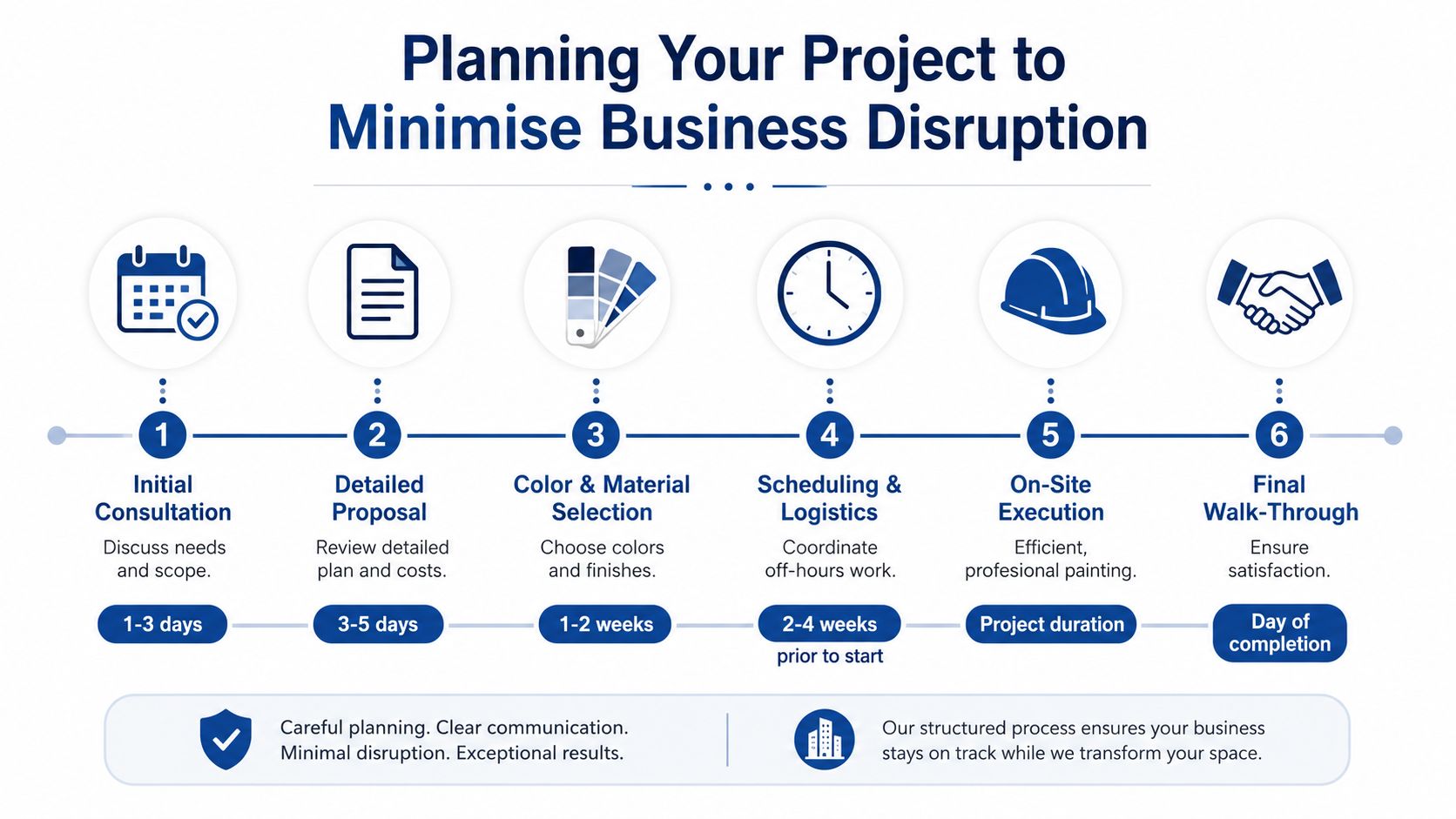
As noted in this commercial painting guide focused on business continuity, many price guides ignore operational downtime even though lost revenue during closure can outweigh the premium paid for after-hours or staged work. On the North Shore, that's especially relevant for retail strips, medical tenancies, shared office floors, and service businesses that depend on uninterrupted access.
What a disruption-aware plan looks like
A professional programme should answer practical questions before work starts:
- Which areas stay live: Entrances, tills, meeting rooms, bathrooms, and staff routes need to remain usable or have a clear temporary alternative.
- When noisy prep happens: Sanding, patching, and movement of access gear should be timed around your quietest periods.
- How sections are isolated: Dust control, signage, masking, and controlled access stop one work zone from affecting the whole tenancy.
- What dries overnight: Low-odour systems and sensible sequencing let teams return to a usable space the next morning.
A useful comparison is a multi-level office. If all floors are tackled at once, staff displacement becomes the primary issue. If the work is broken into zones and completed over evenings or weekends, each floor returns to service before the next starts.
Here's a good visual overview of how that planning rhythm works in practice:
Questions worth asking before you accept a quote
Many owners compare only scope and price. A better approach is to compare continuity planning.
Ask the contractor:
- How will you stage the work so trading or office operations can continue?
- Which tasks will happen after hours?
- How will you separate work zones from customer or staff areas?
- What coating system are you using in occupied interiors?
- Who handles final cleanup before handover?
That last point matters more than people expect. A commercial site shouldn't be handed back with fine dust on joinery, residue on glazing, or debris left for your team to sort out. For managers who want a useful benchmark for post-project standards, this Australian handover cleaning manual is worth reviewing. It gives a practical sense of what “ready for use” should mean after works are complete.
The cheapest quote can become the most expensive one if it interrupts sales, meetings, bookings, or staff productivity.
A good commercial painter prices the work and the logistics. Both matter.
How to Budget for Your Commercial Painting Project
Budgeting for commercial interior painting in Auckland starts with square metre rates, but that's only the starting point. The final cost shifts with access, condition, coating type, programme constraints, and how much planning is needed to keep the business open while the work happens.
According to IBISWorld's New Zealand painting and decorating industry data, Auckland commercial interior painting typically costs $20 to $45 per square metre for office spaces and $25 to $55 per square metre for retail spaces. The same source notes these rates are often 15% to 25% higher than provincial averages because of labour costs and compliance requirements such as Site Safe certification and after-hours scheduling.
What pushes a quote up or down
A plain rectangular office with sound walls, easy access, and standard weekday access is a simpler job than an occupied retail fit-out with feature colours, damaged stopping, and restricted trading hours.
The main cost drivers usually look like this:
- Surface condition: Old fixings, dents, patch repairs, peeling areas, and uneven stopping increase labour before painting even starts.
- Access and layout: High voids, stairwells, glass partitions, fixed shelving, and tight operational spaces slow the work down.
- Coating selection: Standard wall systems cost less than specialist finishes chosen for heavy wear, food-adjacent spaces, or stricter performance demands.
- Scheduling constraints: Night work, weekend access, and phased delivery are valuable, but they change labour planning.
- Compliance and site management: Site inductions, health and safety paperwork, and managed access all add real time to a project.
Sample project estimates for North Shore businesses 2026
The table below gives a practical budgeting framework. It isn't a fixed price list. It's a way to compare quotes with a clearer idea of what's normal for different types of commercial spaces.
| Project Type | Typical Scope | Estimated Duration (Staged Work) | Budget Range (per m²) |
|---|---|---|---|
| Office interior | Reception, offices, meeting rooms, corridors | Evenings or weekends over multiple stages | $20 to $45 |
| Retail interior | Shop floor, fitting rooms, stockroom, counter area | Staged around trading hours | $25 to $55 |
| Warehouse interior | Large wall areas with simpler access and substrate demands | Section-by-section to keep operations moving | $12 to $30 |
The warehouse range above comes from New Zealand commercial painting cost guidance, which also notes that warehouses are typically the most cost-efficient commercial interior type because of larger surface areas and simpler substrate requirements.
How to compare quotes properly
A lower rate doesn't automatically mean lower total cost. It may only mean less prep, less protection, fewer coats, or no practical plan for keeping your site operational.
When reviewing pricing, check whether the quote clearly states:
- Preparation scope: Washing, sanding, filling, repairs, and priming
- Protection measures: Masking, floor covering, furniture or equipment protection
- Coating system: Brand, product type, and intended finish
- Programme details: Day works, after-hours works, staging, and access assumptions
- Completion standard: Touch-ups, waste removal, and final handover condition
If you want a useful reference point for how painting estimates are typically structured, this guide to interior painting prices and quote variables helps explain how labour, prep, and finish expectations affect pricing logic.
Budgeting gets easier when the quote is itemised and the contractor explains what each line is protecting. That's when you can judge value, not just price.
Selecting the Right North Shore Painting Contractor
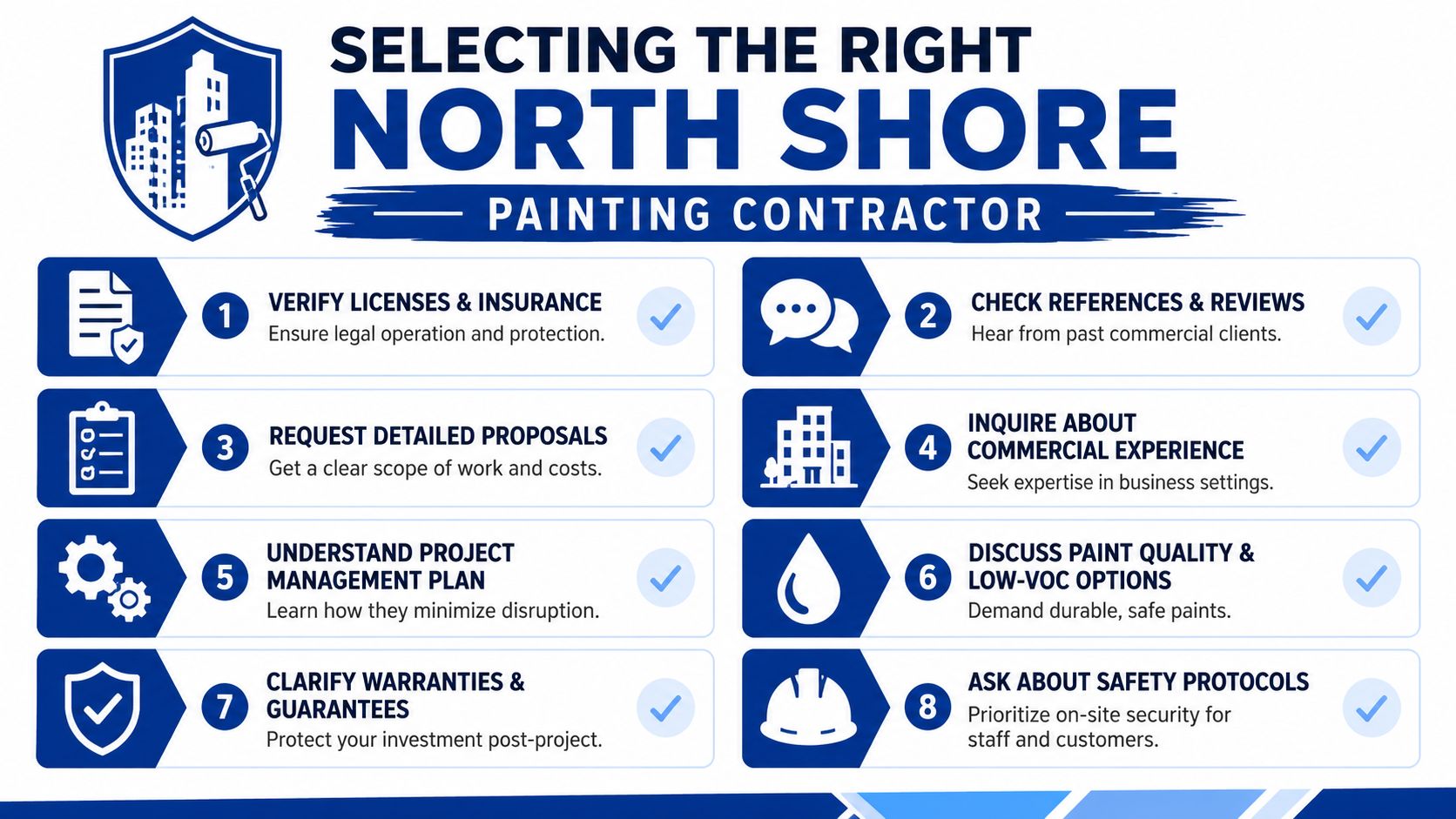
Choosing a contractor for commercial interior painting is a risk decision before it's a paint decision. If the crew is disorganised, underinsured, vague on prep, or weak on site management, the problems usually show up during the job, not before it.
The documents and details that matter
A commercial painter should be able to provide the basics without hesitation.
- Insurance cover: This protects the client if property damage or site issues arise during the works.
- Site Safe capability: On many Auckland commercial sites, safety compliance isn't optional. Crews need to work inside formal site rules.
- Written scope: The quote should define prep, products, exclusions, access assumptions, and handover expectations.
- Workmanship backing: A written guarantee shows the contractor is prepared to stand behind the system and application.
If any of those points are vague, treat that as a warning sign rather than a paperwork delay.
Read the quote like a site manager
A strong proposal is specific. A weak one is broad and comfortable sounding.
Look for detail such as room-by-room scope, wall and trim separation, surface repairs, primer allowance, protection of floors and fixtures, and the programme for occupied areas. A lump-sum figure with little explanation makes disputes more likely because the client and painter may be imagining different jobs.
Ask one direct question: “What have you assumed about access, preparation, and occupied areas?” The answer tells you whether the contractor has priced the real job or an easier version of it.
Local experience matters
North Shore sites have their own quirks. Coastal air, variable humidity, busy retail strips, shared access in office blocks, and older substrates in refurbished buildings all affect how work should be planned. A contractor who regularly handles commercial painting projects across Auckland should be able to explain how they deal with those conditions, not just promise a tidy finish.
References also matter, especially from businesses with similar operating conditions to yours. A painter who's done quality work in an empty unit may not be the right fit for an occupied medical practice, school office, or active retail tenancy.
The best contractors make the job feel predictable. That's what you're really buying.
Maintenance and Longevity in Coastal Conditions
A commercial repaint doesn't end at handover. The long-term result depends on how the space is used, how it's cleaned, and whether the coating was matched to the environment in the first place.
On the North Shore, even interiors can feel the local conditions. Buildings near the coast, sites with frequent door opening, and spaces with strong airflow can bring in extra moisture, fine salt residue, and dirt at entry points. That doesn't mean the paint system will fail. It does mean maintenance needs to be more deliberate.
Keep the finish working longer
A few habits make a real difference:
- Clean marks early: Scuffs and hand marks are easier to remove before they set into textured or lower-sheen surfaces.
- Use mild cleaning methods: Harsh abrasives can burnish painted walls, especially in darker colours.
- Watch high-contact points: Corners, lift lobbies, entry walls, and behind seating usually need touch-ups first.
- Inspect moisture-prone areas: Staff kitchens, bathrooms, and poorly ventilated rooms should be checked before staining or peeling develops.
It also helps to think beyond the wall surface. Dust and airborne particles move through occupied commercial spaces more than many owners realise. For businesses reviewing overall interior hygiene after refurbishment or repainting, this commercial air duct cleaning guide is a useful companion read because ventilation cleanliness affects how fresh the space feels after the decorating work is done.
A durable paint job is part application, part maintenance. The building team controls the second half.
If the original prep was thorough and the coating choice was sensible, touch-ups stay localised and the full repaint cycle becomes easier to manage.
Frequently Asked Questions
How long does commercial interior painting take?
It depends on access, surface condition, and whether the work is staged around trading or office hours. A straightforward tenancy can move quickly. An occupied site with night work, multiple approvals, and careful sequencing will take longer, but usually with less disruption to the business.
Can painting happen while staff are still on site?
Yes, if the project is planned properly. The key is separating active work zones, using suitable low-odour systems, and timing prep and coating work around how the premises operate.
Is low-VOC paint worth asking for?
Yes, especially in occupied offices, retail spaces, clinics, and shared commercial buildings. It improves comfort during the project and aligns with what building owners now expect in commercial specifications, as noted earlier.
What should be included in a commercial painting quote?
You want clear detail on preparation, protection, primer and topcoat systems, number of coats where relevant, exclusions, access assumptions, scheduling, and cleanup. If the quote is vague, the scope is vague.
Do I need to move furniture and equipment myself?
Not always, but that should be agreed before work starts. Some projects include shifting light furniture or working around fixed items. Sensitive equipment, stock, and IT areas often need a specific plan.
What's the most common mistake business owners make?
Choosing on headline price alone. A cheaper quote can leave out the things that matter most on a live commercial site, such as staged work, protection, proper prep, and a realistic handover standard.
If you're planning a repaint and want a team that understands North Shore commercial sites, Painters North Shore can help with practical site assessments, detailed scopes, and scheduling that keeps business disruption to a minimum.